Best Doorbell Camera 2026: Engineering Behind the Top Picks
A 4K camera at 30fps using H.265 encoding produces 8-12 Mbps of traffic while the same resolution with H.264 requires 16-24 Mbps. H.265 therefore saves 40-50% bandwidth. (HEVC/H.265 specification, 2024). This single engineering choice directly determines network load, NVR storage sizing, and long-term operational costs when deploying the best doorbell camera.
Sony IMX415 (8MP/4K, 1.45μm pixels) and IMX335 (5MP, 2.0μm pixels) sensors dominate mid-to-high-end models. (Sony Semiconductor - Security Camera Sensors, 2024). Larger pixels deliver superior low-light performance while higher resolution supports better facial and license plate capture. The concrete takeaway is that sensor selection must match your primary use case rather than chasing headline megapixel counts.
Decision Criteria: SoC, ISP Pipeline, and Real-Time Processing Requirements
Ambarella CV-series chipsets power most premium consumer cameras. (Ambarella CV2x/CV5x Series, 2025). HiSilicon solutions still appear in roughly 35% of global IP cameras. (Counterpoint Research / teardown analysis, 2024). The SoC determines ISP quality, update cadence, power efficiency, and whether the device receives meaningful firmware support beyond the first year.
ONVIF Profile S is supported by 90%+ of IP cameras while Profile T (advanced streaming with H.265) adoption sits at ~60%. (ONVIF conformant products database, 2025). Full ONVIF compliance remains the clearest predictor of successful integration with third-party NVRs and local storage systems.
How the Signal Chain Actually Works in a 2026 Doorbell Camera
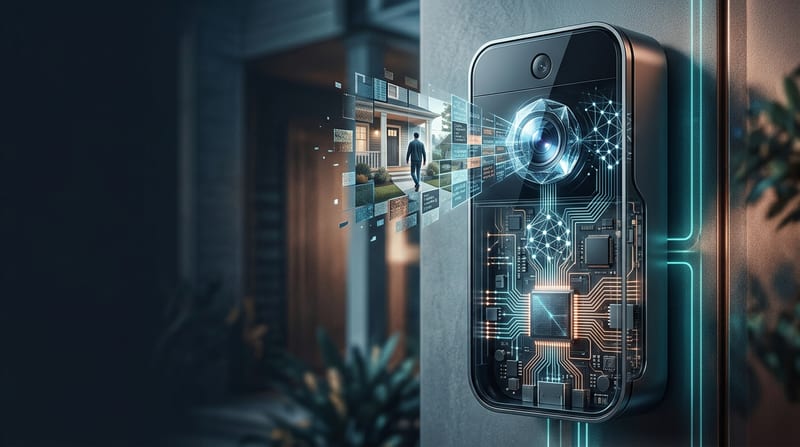
Light strikes the sensor, moves through the ISP for demosaicing, noise reduction, WDR, and tone mapping, then reaches the hardware video encoder. The entire pipeline must complete within a 33ms frame budget at 30fps. Most sub-$150 units use simplified ISP paths that skip steps, producing visibly poorer night footage despite using the same Sony sensor as premium models.
"FreeRTOS dominance isn't because it's the best RTOS. It's because it's free, well-documented, and runs on everything. Good enough wins in embedded," says Richard Barry, creator of FreeRTOS, Principal Engineer at AWS. (FreeRTOS Developer Documentation, 2025). Worst-case interrupt latency on FreeRTOS running on modern cores sits near 3μs. This timing guarantee matters when the device must simultaneously handle video encoding, AI detection, and network transport.
Cloud vs Local Storage: 5-Year Cost and Control Analysis
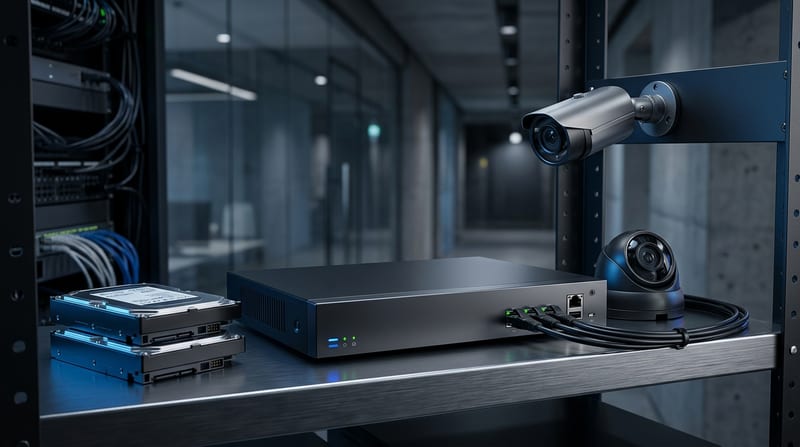
Ring Protect Plus costs $10/mo, Arlo Secure $13/mo, and Google Nest Aware $8/mo. Over five years a four-camera cloud system totals $480-$780 in subscriptions alone. A local NVR with 4TB HDD costs $200-$400 once. (Manufacturer pricing pages, 2025).
One 4K/H.265 camera at 15fps continuous recording consumes ~2.7 TB per month. Eight cameras require 21.6 TB/month. Most residential NVRs ship with 2-4TB drives - enough for only 7-14 days before overwrite. (Calculated from standard bitrate tables, 2025).
The concrete takeaway: best doorbell camera without subscription models shift the economics dramatically toward local NVR or edge storage once you exceed two cameras.
Power Delivery and Installation Decision Points
Most IP cameras need 8-15W. PoE 802.3af delivers 15.4W per port (12.95W at the device), 802.3at delivers 30W, and 802.3bt reaches 60-90W. (IEEE 802.3 standard, 2024). Battery-powered wireless doorbells must manage aggressive duty cycling while wired units stress existing 16V/10VA transformers that were never designed for continuous 5-10W loads.
Matter and Protocol Reliability Considerations
"Matter 1.4 specification released November 2024 - adds support for energy management devices, EV chargers, and major appliances. 2,800+ certified devices." (Connectivity Standards Alliance - Matter, 2025).
"Every smart home protocol claims to be the last one you'll ever need. Zigbee said it. Z-Wave said it. Now Matter says it. The difference is that Matter has Apple, Google, and Amazon all pushing it simultaneously," says Stacey Higginbotham, IoT journalist and founder of Stacey on IoT. (Connectivity Standards Alliance - Matter, 2025).
The physical layer still matters. Thread mesh adds hop latency of 10-30ms per hop while WiFi provides direct connectivity at the cost of higher power.
Action Plan: Selecting and Deploying the Right System
For local-only operation (best doorbell camera without subscription): Prioritize units with verified full local storage and ONVIF Profile T/G support. Eufy and properly configured Ambarella-based systems currently offer the strongest local-first implementations. Block all outbound internet access at the router after initial setup and route remote viewing through a VPN.
For maximum reliability and image quality: Target the $180-$280 tier using Ambarella CV25/CV28 with IMX415 sensor, H.265 encoding, and at least 1-2 TOPS NPU. Verify the manufacturer maintains a public firmware update history longer than 18 months.
For full smart home integration: Require Matter certification and Thread or WiFi 6 connectivity. Test interoperability with your existing border router (Apple TV 4K, HomePod Mini, or Nest Hub) before finalizing the purchase.
Firmware and security baseline: Reject any device still using HiSilicon BSPs without documented long-term support commitments. The shared Board Support Package model means one vulnerability can impact hundreds of brands.
The engineering decisions made at the silicon level determine whether your front door device becomes a reliable security asset or an ongoing maintenance burden. Focus on measurable implementation details - codec efficiency, local storage architecture, update cadence, and power delivery - rather than marketing feature lists. These choices compound over the 5+ year lifespan of a properly implemented system.